What is ankle osteoarthritis?
Ankle osteoarthritis is a condition in which the cartilage in the ankle joint gradually wears away,
causing the bones to move closer together. This results in pain, stiffness, and sometimes a cracking
or grinding sensation during movement. Osteoarthritis usually develops gradually but can progress
more quickly after an ankle fracture, repeated sprains, or long-term overuse. Genetic predisposition
and being overweight can also be risk factors.
Causes of ankle osteoarthritis
Ankle osteoarthritis does not develop without reason. In most cases, it is the result of a previous
injury. The ankle may have been traumatized in the past, for example during sports. An incorrect
landing can lead to torn ligaments or a bone fracture. During recovery, the alignment of the ankle
may change slightly, causing increased peak loads on the cartilage within the ankle joint. Over time,
this excessive stress can result in ankle osteoarthritis.
Symptoms of a worn ankle joint
You may notice increasing difficulty when walking up and especially down stairs, as well as trouble
standing on your toes. Pain is often felt around the ankle joint, particularly at the front of the ankle.
- Reduced range of motion in the ankle
- Start-up pain (especially in the morning)
- Pain decreases after moving the ankle
- Pain in the ankle, even at rest
- Swelling or a thickened ankle
- Pain when rolling off the foot while walking
Diagnosis of ankle osteoarthritis
The diagnosis of ankle osteoarthritis is based on symptoms, physical examination and X-rays. The physician assesses ankle mobility, swelling and any alignment abnormalities. X-ray images can show whether the cartilage has thinned and whether bone spurs (osteophytes) have developed.
Treatment and recovery of ankle osteoarthritis
Treatment of ankle osteoarthritis focuses on reducing joint load, wearing proper footwear and using an ankle brace for additional support. Exercises and physiotherapy help keep the ankle strong and flexible. In severe cases, pain medication, injections or, in rare situations, surgery such as an ankle replacement or joint fusion may be necessary. Recovery aims to reduce pain and preserve mobility.
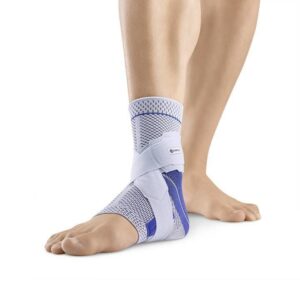
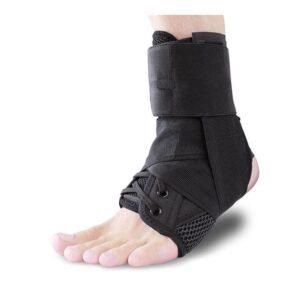
Supportive ankle brace for osteoarthritis
An ankle brace provides stability and support to the ankle joint, helping to reduce pain and swelling. The brace unloads the ankle during walking and daily activities. Wearing a brace can help prevent worsening of symptoms and allow you to remain mobile for longer.
Which braces are suitable for ankle osteoarthritis?
If you suspect that you have developed ankle osteoarthritis, we recommend contacting a medical specialist for advice and having an X-ray taken. This is usually sufficient to diagnose osteoarthritis. You can also contact us for advice on a suitable ankle brace or ankle support. It has been proven that wearing an ankle brace or ankle support significantly reduces pain. A brace specifically designed for osteoarthritis helps reduce pain, improve physical function and decrease stiffness.