What is a patellar luxation and when does the kneecap dislocate?
In a patellar luxation, the kneecap becomes dislocated and moves out of the groove of the thigh bone. This is also called a kneecap dislocation or patellar dislocation. It often happens suddenly during a twisting movement, jump, or incorrect landing. After a first dislocation, the kneecap can remain unstable, increasing the risk of recurrence. Symptoms may include pain at the front of the knee, swelling, and a feeling of insecurity during movement.
Position and function of the kneecap
The kneecap (patella) normally moves smoothly in a groove at the front of the thigh bone. This structure helps distribute forces during bending and straightening and provides stability to the knee joint. When the kneecap dislocates, surrounding ligaments and structures can be damaged, which may lead to long-term instability.
Why does the kneecap dislocate?
A dislocated kneecap can result from a sudden twisting movement, a direct blow to the knee, or congenital instability of the kneecap. Muscle weakness or altered leg alignment can also increase the risk of patellar luxation. As a result, the kneecap can more easily shift outwards.
How does a patellar dislocation occur?
A patellar dislocation often occurs during sports that involve rapid changes of direction, such as football, handball, or skiing. When the lower leg rotates while the foot remains planted, the kneecap can dislocate. After an initial dislocation, the knee may remain more prone to repeated episodes of instability.
Symptoms of a dislocated kneecap
- Sudden pain at the front of the knee
- Swelling or an increasingly swollen knee
- A visibly displaced kneecap
- An unstable or insecure feeling while walking
- Difficulty bending or straightening the knee
Why does the knee remain unstable after a patellar luxation?
After a dislocation, the ligaments around the kneecap can become stretched or damaged. This can make it harder for the kneecap to stay in place during movement. Especially when climbing stairs, turning, or playing sports, this can lead to insecurity and fear of another dislocation. Targeted training and support can help improve stability.
What should you do if your kneecap dislocates?
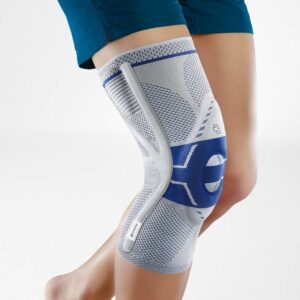
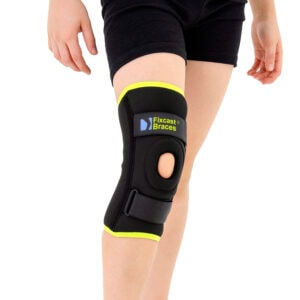
If your kneecap dislocates, it is important to keep the knee as calm and unloaded as possible and to avoid further strain. In some cases, the kneecap returns to its position on its own, but this can be accompanied by pain and swelling. Cooling the knee and elevating the leg can help reduce the initial symptoms. After a first patellar luxation or with persistent pain, always contact a doctor or physiotherapist for proper assessment. After a patellar dislocation, wearing a stabilizing knee brace can provide support by guiding the kneecap and reducing the feeling of instability during movement.
Diagnosis and treatment of a dislocated kneecap
A patellar luxation can recover through conservative or surgical treatment. With conservative treatment, the kneecap is repositioned in the joint and the knee may be immobilized with a cast or a (similar) Bauerfeind SecuTec brace. Rehabilitation then begins. The ligaments around the kneecap need time to heal and strengthen. Not all movements can be performed immediately. Especially during stair climbing, standing up, squatting, or cycling, there is a risk of another patellar luxation. It is advisable to use a knee brace that limits extension and flexion movements.
Support with a knee brace for patellar luxation
A knee brace can help keep the kneecap in the correct position and reduce the risk of a new dislocation. Targeted support around the patella improves control of kneecap movement, which can increase confidence during walking and sports. Particularly with an unstable kneecap or after a patellar dislocation, a stabilizing knee brace can contribute to safer and more comfortable movement.
Benefits of a knee brace for a dislocated kneecap
Wearing a knee brace after a patellar luxation can help stabilize the knee joint and reduce strain on the kneecap. A good knee brace supports the knee without completely restricting freedom of movement.
- Helps keep the kneecap in place
- Reduces instability after a patellar dislocation
- Provides extra confidence during movement
- Support during sports and daily activities
- Comfortable and adjustable design
- Limits movement without full immobilization